How to Protect Yourself From Wire Fraud When Closing on a Home
Buying a home is exciting, but the days leading up to closing are also a time when buyers need to be especially careful with emails, phone calls and requests involving money.
One of the most serious threats facing homebuyers in the home buying process is real estate wire fraud, sometimes called mortgage closing wire fraud, closing scams or business email compromise (BEC). Criminals may impersonate a title company, real estate agent, lender, attorney or another trusted person involved in the transaction in an attempt to convince a buyer to wire closing funds to a fraudulent bank account.
The danger is that the communication may look completely legitimate.
A fraudulent email can contain familiar names, transaction details, logos, signatures and even information about your upcoming closing. One small change to an email address or a convincing message telling you that wiring instructions have changed can potentially redirect thousands of dollars.
Whether you are buying a home in Kingwood, Humble, Atascocita, Porter, New Caney, Conroe, The Woodlands or elsewhere in the Houston area, understanding how these scams work before closing is one of the best ways to protect yourself.
What Is Real Estate Wire Fraud?
Real estate wire fraud occurs when a criminal attempts to redirect money associated with a real estate transaction into an account controlled by the criminal.
Home purchases are attractive targets because large amounts of money may be transferred at closing. A buyer may be preparing to send a down payment, closing costs or other funds, while sellers may be expecting proceeds from the sale of their home.
The FBI identifies fraudulent home-closing wire instructions as one form of Business Email Compromise (BEC). Criminals may spoof an email address or website, send phishing emails, compromise legitimate email accounts or impersonate someone the victim already trusts.
The goal is simple: make the fraudulent communication look convincing enough that you send the money before realizing anything is wrong.
How Does a Home Closing Wire Fraud Scam Work?
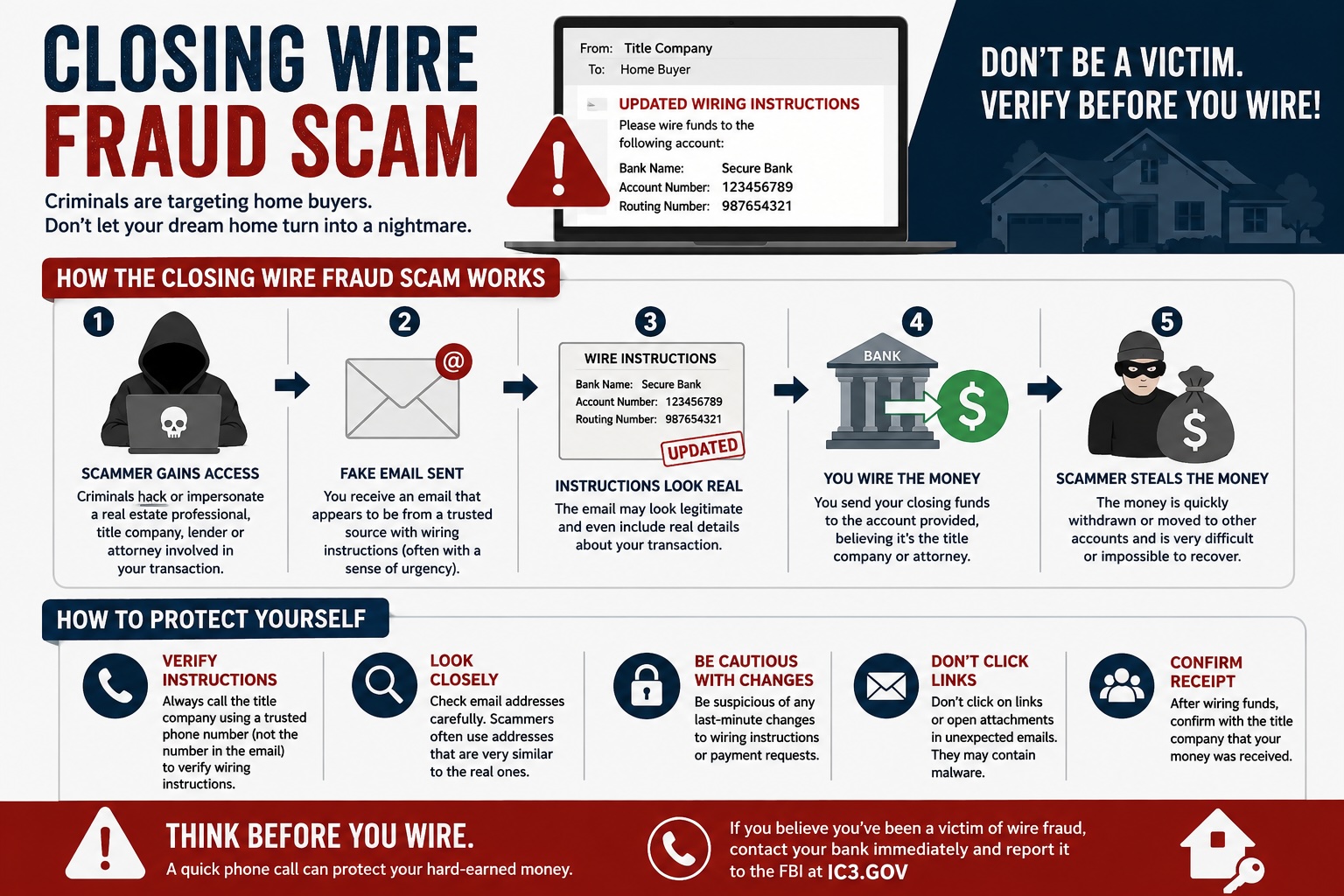
A typical scam may begin long before the buyer receives the fraudulent wiring instructions.
Criminals can use phishing, compromised email accounts and other methods to obtain information about a real estate transaction. Once they have enough information, they may wait until the transaction is approaching closing.
That timing is important.
During the final days before closing, buyers may be communicating with their real estate agent, lender, title company, insurance company and other professionals. Documents are being reviewed, final numbers are changing and there can be a sense of urgency.
Then an email arrives that appears to come from someone involved in the transaction.
It might say:
“Here are the wiring instructions for tomorrow’s closing.”
Or:
“Our bank information has changed. Please use these updated wiring instructions.”
The email may look legitimate, but the account information belongs to the criminal.
The buyer sends the wire believing the money is going to the title or settlement company.
By the time this real estate wire fraud is discovered, the criminal may already be attempting to move the money again.
Why Are Fake Emails So Difficult to Spot?
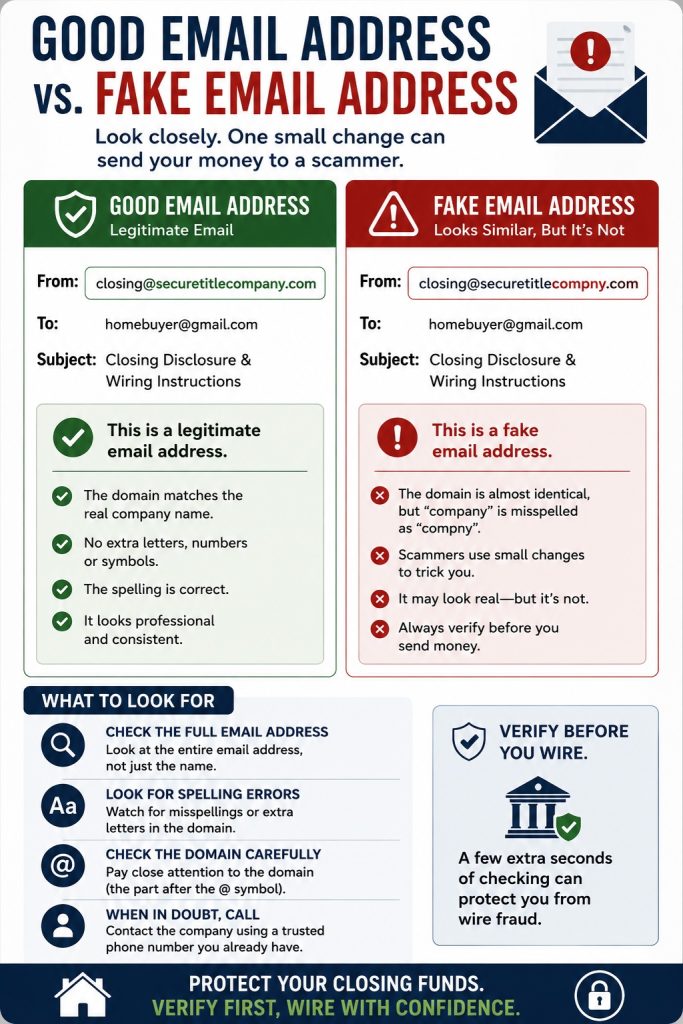
Fraudulent emails are not always filled with spelling mistakes or obvious warning signs.
Criminals can create email addresses that are extremely similar to legitimate addresses. For example, a fraudster might substitute a letter, remove a character or use a slightly different domain.
At a quick glance, the difference can be difficult to notice.
The message may also contain a copied company logo, professional-looking signature and information that makes the request appear legitimate.
This is why simply looking at an email and deciding that it “looks real” is not enough when you are being asked to transfer money.
The Most Important Rule: Verify Wiring Instructions Independently
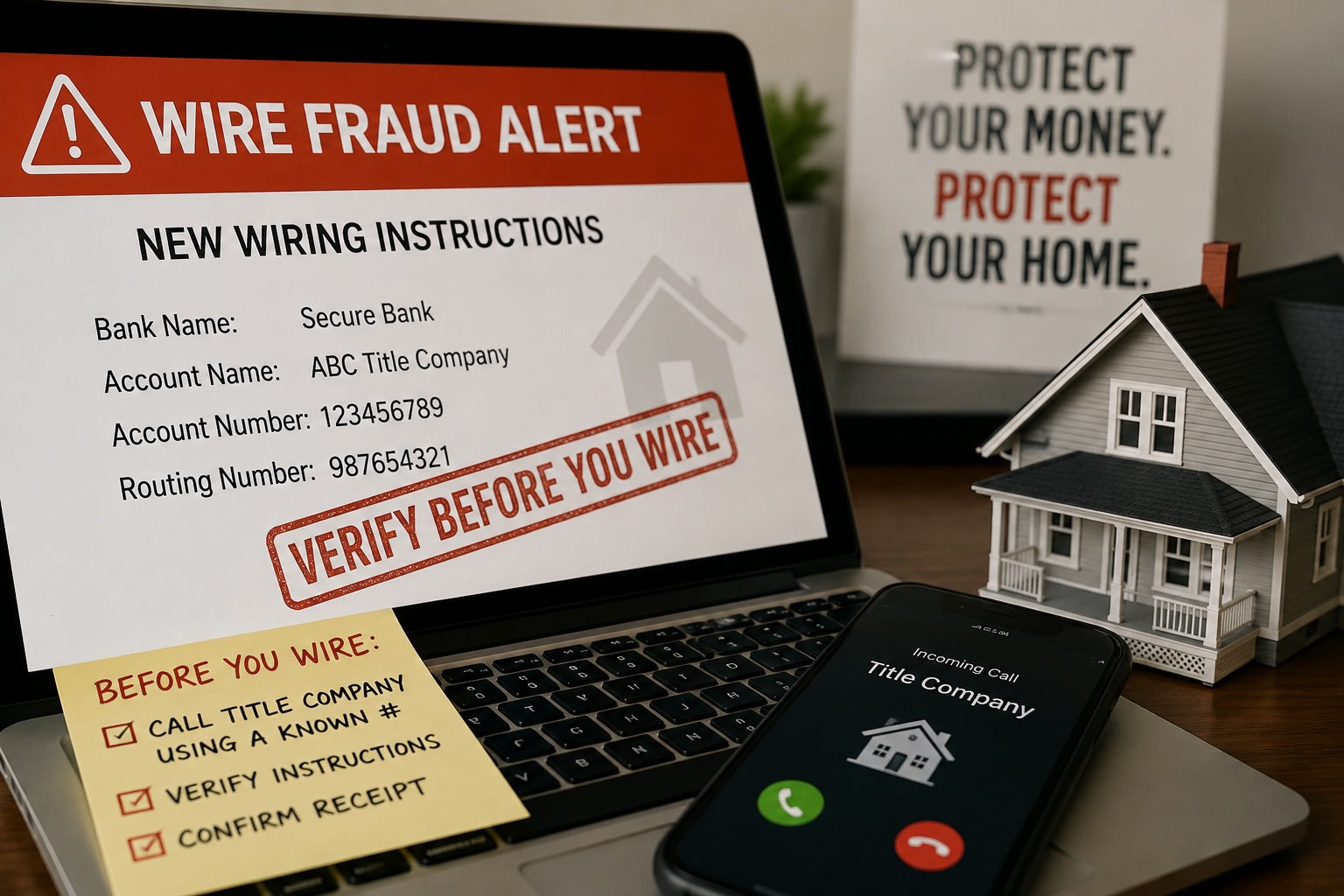
Before wiring money for a real estate closing, verify the instructions independently with the title or settlement company using contact information you already know is legitimate.
Do not rely on the telephone number contained in the email with the wiring instructions.
If the email is fraudulent, the telephone number may also belong to the scammer.
Instead, use a previously verified number for the title company, such as a number you received earlier in the transaction or independently confirmed.
Call the title company and verify the wiring information before initiating the transfer.
When thousands—or potentially hundreds of thousands—of dollars are involved, an extra telephone call is worth the time.
Be Extremely Suspicious of Changed Wiring Instructions
A message telling you that wiring instructions have suddenly changed should immediately get your attention.
The American Land Title Association advises consumers to be suspicious of changes to bank or wiring information during a transaction.
If you receive an email claiming that previously provided wiring instructions have changed, do not send the money based on the email.
Stop and independently contact your title or settlement company.
Even if the message appears to come from your real estate agent, lender, attorney or title company, verify it separately.
10 Ways Homebuyers Can Help Protect Themselves From Wire Fraud
Don’t wait until the day before closing to find out how your funds will be handled.
Ask your title company how wiring instructions will be delivered and what procedures they use to verify them. Knowing what to expect makes an unexpected request easier to recognize.
An email can be spoofed, altered or sent from a compromised account.
Before sending closing funds, independently verify the instructions with the title company.
If someone sends you wiring instructions and tells you to call a particular number with questions, don’t assume that number is legitimate.
Use a phone number that you independently know belongs to the title company.
A last-minute message saying, “We have new wiring instructions,” should be treated as a major warning sign.
Do not send money until you have independently verified the request.
Don’t just look at the sender’s displayed name.
Examine the actual email address.
A criminal may change only one letter or character to create an address that looks very similar to a legitimate one.
Don’t automatically click a link or open an attachment because an email appears to come from someone involved in your transaction.
Phishing emails may be used to steal passwords or gain access to email accounts.
Use multi-factor authentication on your email account whenever possible.
The FBI recommends multi-factor authentication as one way to help protect accounts from Business Email Compromise schemes.
Also use strong, unique passwords and avoid reusing your email password on other websites.
Messages such as:
“Wire this immediately.”
“We need this within the next hour.”
“Closing will be delayed unless you send the funds now.”
should cause you to slow down and verify the request.
Urgency is frequently used to convince victims to act before they have time to question what is happening.
After sending closing funds, contact the title company using your independently verified telephone number and confirm that the funds were received.
Don’t simply assume everything went through correctly.
Be thoughtful about what you share online and through unsecured communication.
Information about your purchase, closing date or transaction may potentially help criminals make a fraudulent request more convincing.
Should You Email Financial Information During a Real Estate Transaction?
Sensitive financial information deserves special care.
Do not casually send bank account numbers, passwords, Social Security numbers or other confidential financial information through regular email.
Follow the secure procedures provided by your lender, title company or other verified professional.
If you’re uncertain whether a request for information is legitimate, call the company using a telephone number you independently trust before providing anything.
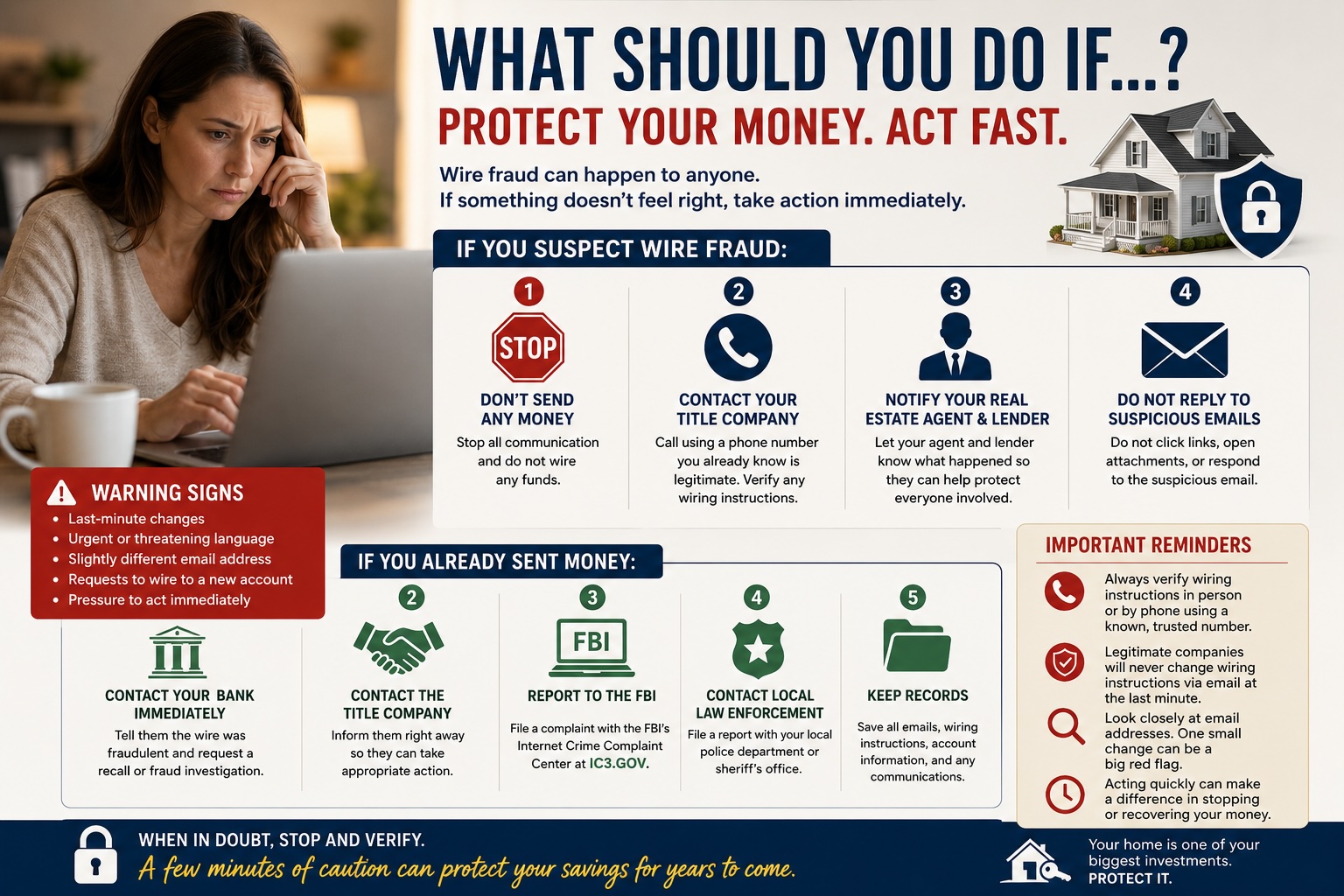
What Should You Do If You Think You’ve Received Fraudulent Wiring Instructions?
If something doesn’t look right, do not send the money.
Contact your title company immediately using a verified telephone number and ask whether the communication came from them.
You should also alert your real estate agent and, when appropriate, your lender so everyone involved in the transaction knows about the suspicious communication.
Do not reply directly to the questionable email to ask whether it is legitimate. If the criminal controls the email account or created the fraudulent address, you may simply be communicating with the scammer.
What Should You Do If You Already Sent Money to a Fraudulent Account?
Time is extremely important.
If you believe you wired money to a fraudulent account:
- Contact your bank or financial institution immediately. Tell them you believe the wire was fraudulent and ask whether they can initiate a recall or other fraud-recovery procedure.
- Contact the title or settlement company immediately.
- Report the incident to the FBI’s Internet Crime Complaint Center (IC3).
- Contact appropriate law enforcement authorities.
- Keep copies of emails, wiring instructions, account information and other communications related to the incident.
Do not wait until the next business day simply because the transaction has already occurred. The faster the financial institution and authorities are notified, the better the opportunity may be to attempt to stop or recover transferred funds.

Can Your Real Estate Agent Help Prevent Real Estate Wire Fraud?
Your real estate agent is one part of a much larger transaction involving lenders, title professionals, inspectors, insurance providers and other parties.
An experienced agent should help keep communication organized and encourage buyers to verify financial instructions directly with the appropriate party.
However, buyers should never assume an email involving money is legitimate simply because it appears to come from their agent—or anyone else involved in the transaction.
When it comes to wiring money, independent verification is essential.
As a REALTOR® serving Kingwood and Northeast Houston, I want my clients to understand the closing process before we reach the closing table. Asking questions is encouraged, especially when something involves your money or doesn’t seem consistent with what you were previously told.
Frequently Asked Questions About Real Estate Wire Fraud
Call the title company using a telephone number you independently know is correct and verify the wiring instructions before transferring funds. Do not use a telephone number contained only in the email you are trying to verify.
An unexpected email claiming that bank information or wiring instructions have changed should be treated as suspicious. Independently contact the title company before taking any action.
Yes. Criminals may spoof email addresses, create look-alike addresses or compromise legitimate email accounts. A familiar sender name or company logo does not guarantee that the message is authentic.
Yes. Independently verifying wiring instructions with your title or settlement company before transferring funds is one of the most important precautions you can take.
Do not let urgency prevent you from verifying the request. Call the appropriate company using independently verified contact information before transferring funds.
Contact the title or settlement company and verify that your funds were received.
Contact your financial institution immediately and request assistance with recalling or stopping the transfer. Notify your title company and report the incident to the FBI’s Internet Crime Complaint Center at IC3.gov. Acting quickly is critical.
Protect Your Money Before Closing on Your Houston-Area Home
Buying a home may be one of the largest financial transactions you ever make. Taking a few extra minutes to verify wiring instructions can help protect the money you’ve worked hard to save.
Whether you’re purchasing your first home, moving to Kingwood, relocating to Northeast Houston, downsizing or purchasing your next property, remember one simple rule:
Never wire closing funds based solely on an email. Verify the instructions independently before sending your money.
If you’re planning to buy a home in Kingwood, Humble, Atascocita, Porter, New Caney, Conroe, The Woodlands or the surrounding Northeast Houston area, I can help you understand the home-buying process from your initial home search through closing.
OTHER TYPES OF REAL ESTATE FRAUD
This article is provided for general educational purposes and is not legal, cybersecurity, banking or financial advice.