
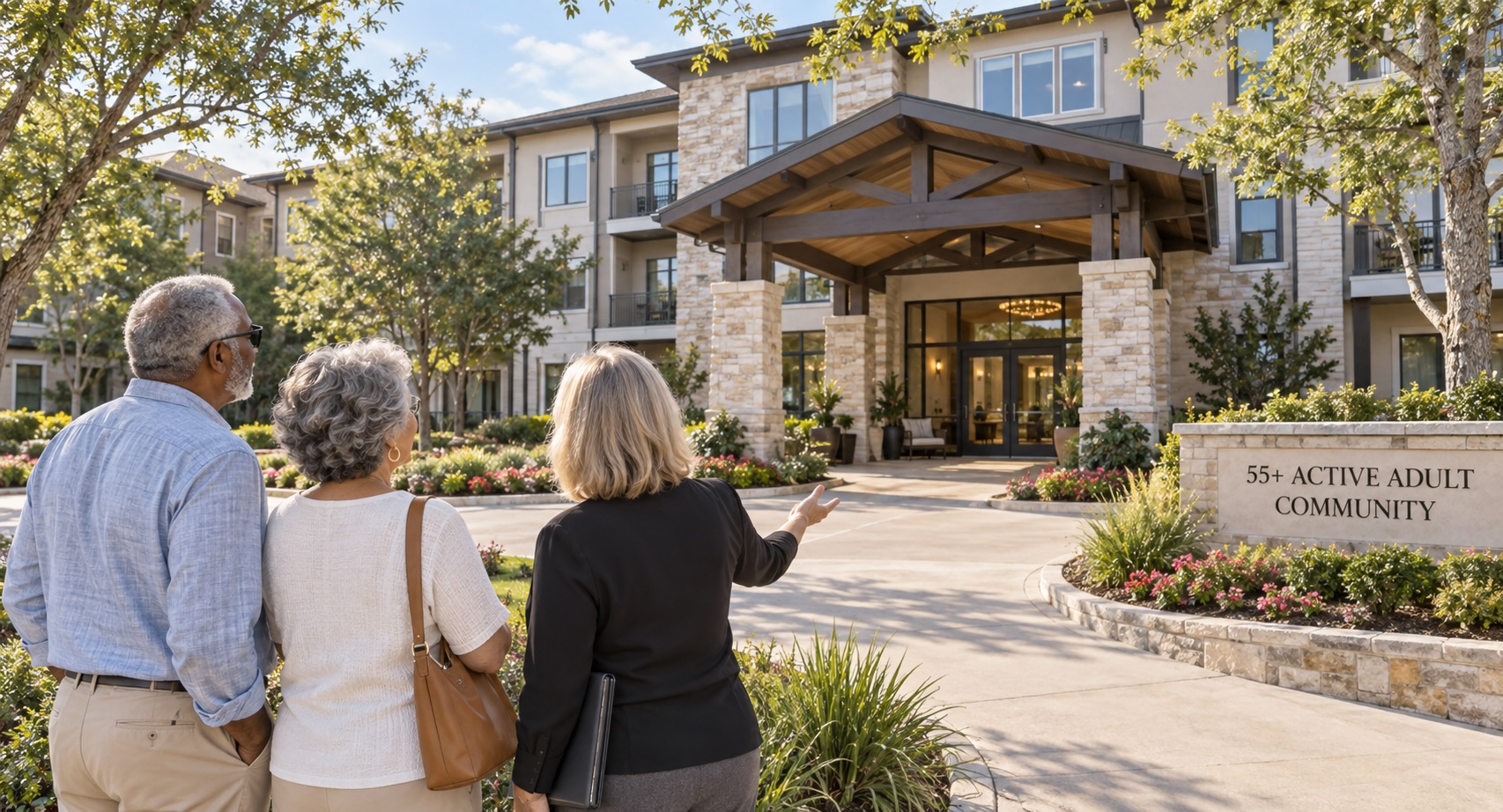
6 Senior Housing Options in Northeast Houston

6 Senior Housing Options: How to Choose the Right Fit for Your Future

Choosing where to live as you grow older is not simply a housing decision. It can affect your independence, finances, daily routine, access to care, and connection with family and friends.

The good news is that senior housing is not one-size-fits-all. Some adults want a smaller home with less maintenance. Others prefer a lively 55+ community with clubs and amenities. Some need help with daily activities or specialized memory care.

Understanding the differences of senior housing options now can make future decisions feel less stressful.

As a Seniors Real Estate Specialist® (SRES®) serving Kingwood, Humble, Atascocita, Porter, New Caney, Conroe, The Woodlands, and surrounding Northeast Houston communities, I help older adults and their families understand the real estate side of a move. Here are six senior housing options to consider.
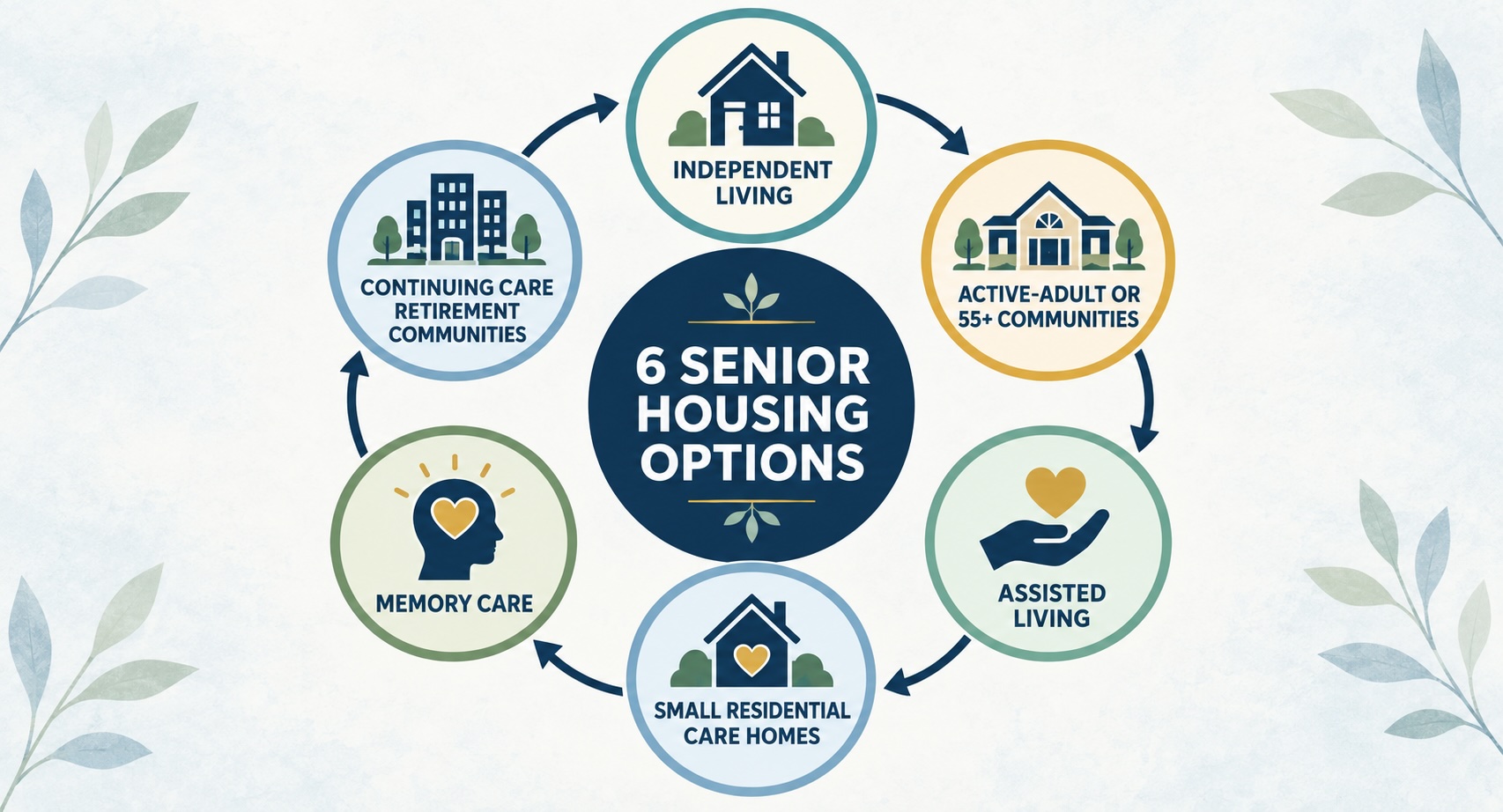
Quick Answer: What Are the Main Senior Housing Options?

The six common senior housing options are:

  1. Independent living

  2. Active-adult or 55+ communities

  3. Assisted living

  4. Small residential care homes

  5. Memory care

  6. Continuing care retirement communities

The right choice depends on your health, desired level of independence, budget, preferred location, social needs, and the amount of support you may need now or later.

Senior housing options from independent living to long term memory care

1. Independent Living

Independent living is designed for older adults who can manage their daily lives without ongoing personal or medical assistance but want a simpler, more convenient lifestyle.

Housing may include apartments, condominiums, patio homes, townhomes, or smaller single-family homes. Some independent-living communities offer meals, housekeeping, transportation, social activities, and maintenance. Others function more like traditional residential communities with age-friendly features.

This option may be a good fit if you:

  • Are healthy and active

  • Can safely manage medications and personal care

  • Want fewer home-maintenance responsibilities

  • Would enjoy activities and neighbors in a similar stage of life

  • Want to remain independent without feeling isolated

Before choosing an independent-living community, ask which services are included in the monthly fee and which cost extra. Also consider whether the home has stairs, wide doorways, a walk-in shower, accessible parking, and space for a caregiver if your needs change.

2. Active-Adult or 55+ Communities

Active-adult communities are built for adults who want an independent lifestyle with social and recreational opportunities. They may include single-family homes, villas, townhomes, condominiums, or rental apartments.

These communities often feature clubhouses, fitness centers, pools, walking trails, pickleball courts, hobby groups, planned outings, and social events. Some provide exterior maintenance or lawn care, while others require homeowners to maintain their own property.

It is important to understand that a 55+ community is generally a lifestyle community—not a healthcare facility. Residents typically live independently, and personal or medical care may not be provided.

In the greater Houston area, buyers can explore active-adult options in and around Kingwood, The Woodlands, Magnolia, Fulshear, Richmond, Willis, and Montgomery County. Available homes, fees, amenities, and age restrictions vary by community.

When comparing 55+ communities, review:

  • Home prices and property taxes

  • Homeowners association fees

  • What the HOA maintains

  • Age and occupancy requirements

  • Community rules and resale restrictions

  • Distance to doctors, hospitals, shopping, worship, and family

  • Whether the floor plans will work if mobility changes

3. Assisted Living

Assisted living is intended for people who want privacy and as much independence as possible but need help with certain activities of daily living. Support may include bathing, dressing, medication assistance, meals, housekeeping, transportation, or mobility.

Residents commonly live in private or semi-private apartments and share dining and activity spaces. Services differ among facilities, so families should ask exactly what level of assistance is available and how fees change when care needs increase.

Assisted living may be appropriate when someone:

  • Is no longer safe living alone

  • Needs regular help with personal care

  • Has difficulty preparing meals or managing medications

  • Experiences falls or mobility challenges

  • Would benefit from 24-hour staff availability

  • Needs more support than independent living provides

In Texas, assisted-living facilities are licensed and regulated through the Texas Health and Human Services Commission. Families can use the state’s provider-search tools and inspection information as part of their research. A personal tour is also important. Observe cleanliness, staff interaction, resident engagement, security, meal options, and the general atmosphere.

4. Small Residential Care Homes

Small residential care homes—sometimes called personal-care homes, board-and-care homes, or residential assisted-living homes—provide care in a house-like setting with fewer residents than a large community.

They may offer meals, housekeeping, supervision, help with personal care, medication assistance, and transportation. Some specialize in particular needs or conditions. Because the setting is smaller, residents may receive more individualized attention and experience a quieter, more familiar routine.

This option can appeal to someone who finds a large facility overwhelming or prefers a close-knit environment. However, services, staffing, licensing, and safety features can vary. Confirm the home’s current Texas license status when applicable, staff coverage, emergency procedures, caregiver training, and whether it can accommodate increasing care needs.

Questions to ask include:

  • How many residents live in the home?

  • Is staff available around the clock?

  • What training and background checks are required?

  • How are medications handled?

  • What happens during a power outage, hurricane, or medical emergency?

  • Can the resident remain if mobility or memory needs change?

5. Memory Care

Memory care provides a secure and structured environment for people living with Alzheimer’s disease or another form of dementia. It may be offered in a dedicated community or in a specialized section of an assisted-living or nursing facility.

Programs are designed around safety, routine, communication, and quality of life. Services may include:

  • Help with bathing, dressing, grooming, and toileting

  • Medication management

  • Meals and hydration support

  • Housekeeping and laundry

  • Structured activities

  • Secure indoor and outdoor spaces

  • Staff trained in dementia care

Memory-care needs can change over time. Families should ask how the community responds to wandering, agitation, falls, nighttime wakefulness, and increasing medical needs. Also ask about staff-to-resident coverage, care-plan updates, family communication, hospital transfers, and what circumstances could require a resident to move.

Memory care is not interchangeable with a standard 55+ or independent-living community. When safety or cognitive decline becomes a concern, a medical assessment and professional care evaluation can help determine the appropriate level of support.

6. Continuing Care Retirement Communities

Continuing care retirement communities, often called CCRCs or life-plan communities, offer multiple levels of living and care within one campus. Depending on the community, those levels may include independent living, assisted living, memory care, and skilled nursing.

The main advantage is continuity. A resident may enter while living independently and transition to additional care without leaving the larger community. Couples with different care needs may also be able to remain near one another.

These communities can involve entrance fees, monthly fees, detailed contracts, and financial or health requirements. Contract structures vary considerably. Before committing, review what is included, how future care is priced, refund provisions, transfer policies, financial stability, and what happens if a resident outlives available funds. Consider having an elder-law attorney and financial professional review the agreement.

How Do You Choose the Right Senior Housing Option?

Start with the person—not the property. A beautiful community is not the right choice if it cannot meet the resident’s needs or is financially unsustainable.

Consider these seven questions:

  1. How much help is needed today? Be realistic about personal care, mobility, meals, medications, driving, and home upkeep.

  2. How might those needs change? A one-story layout, accessible bathroom, nearby healthcare, or expanded care services may become important.

  3. What can comfortably be afforded? Compare the total monthly cost, not just rent or a mortgage. Include HOA fees, taxes, insurance, maintenance, meals, transportation, and care charges.

  4. Where is the support system? Proximity to children, friends, doctors, church, and familiar places can matter as much as amenities.

  5. What kind of lifestyle is preferred? Some people enjoy a full social calendar; others value privacy and quiet.

  6. Is the community properly licensed when care is provided? Verify licensing, complaint history, inspection information, and the scope of services.

  7. What does the contract say? Understand deposits, rate increases, refund rules, discharge policies, and what happens if care needs increase.

Should You Sell Your Current Home Before Choosing Senior Housing?

Not necessarily. It is often wise to explore housing choices, costs, timelines, and eligibility before listing the current home. That does not mean waiting until every detail is final.

An early real estate consultation can help you estimate the home’s likely value, identify repairs that are truly necessary, and create a plan for preparing, marketing, and selling the property. This information can make it easier to compare senior-housing budgets and avoid rushed decisions.

Some homeowners choose to downsize into a smaller traditional home or 55+ community. Others sell before moving to independent living, assisted living, or a continuing-care community.

The best sequence depends on finances, care needs, the local market, and whether the next residence is ready.

Older woman considering selling her longtime home before choosing senior housing.

Local Guidance for Kingwood and Northeast Houston Families

Senior housing options and decisions often involve more than finding a new place to live. A move may include sorting decades of belongings, preparing a long-time home for sale, coordinating with adult children, and managing emotional as well as financial concerns.

As an SRES® and longtime Kingwood-area REALTOR®, I can help with the real estate portion of that transition. That may include evaluating the current home, explaining selling options, recommending practical preparation, locating age-friendly homes or active-adult communities, and coordinating the timing of a sale and move. I can be your senior downsizing REALTOR®!

I do not select medical care or determine the appropriate level of care. Those decisions should involve the older adult, family, healthcare providers, and qualified senior-care professionals. My role is to provide honest real estate guidance and help make the housing transition more manageable.

If you are considering senior housing in Kingwood, Humble, Atascocita, Porter, New Caney, Conroe, The Woodlands, or nearby Harris and Montgomery County communities, contact Tammy James, SRES REALTOR Kingwood TX, with RE/MAX Universal to discuss your next step.

Frequently Asked Questions About Senior Housing

Independent living is for adults who can handle daily life without regular personal-care assistance. Assisted living provides help with activities such as bathing, dressing, medications, meals, and mobility. Services vary, so confirm exactly what each community provides.

No. A 55+ community is generally an age-qualified residential community focused on independent living, amenities, and social activities. Assisted living is a licensed care setting that provides personal assistance and staff support.

An active adult may prefer a smaller traditional home, independent-living community, or 55+ community. The best fit depends on budget, desired amenities, maintenance responsibilities, location, and future accessibility.

Medicare generally does not pay for long-term custodial care or room and board in assisted living. It may cover qualifying medical services received by a resident. Coverage depends on the service and individual eligibility, so verify benefits directly with Medicare, Medicaid, a long-term-care insurer, or a qualified benefits counselor.

Memory care may be appropriate when dementia-related changes create safety concerns, wandering, medication problems, difficulty with personal care, or caregiver exhaustion. A physician or qualified care professional can help evaluate the person’s needs.

A Seniors Real Estate Specialist® has additional education focused on real estate matters affecting older adults. An SRES® can assist with selling a longtime home, downsizing, purchasing an age-friendly home, exploring 55+ communities, and coordinating the real estate timeline with a larger transition plan.